

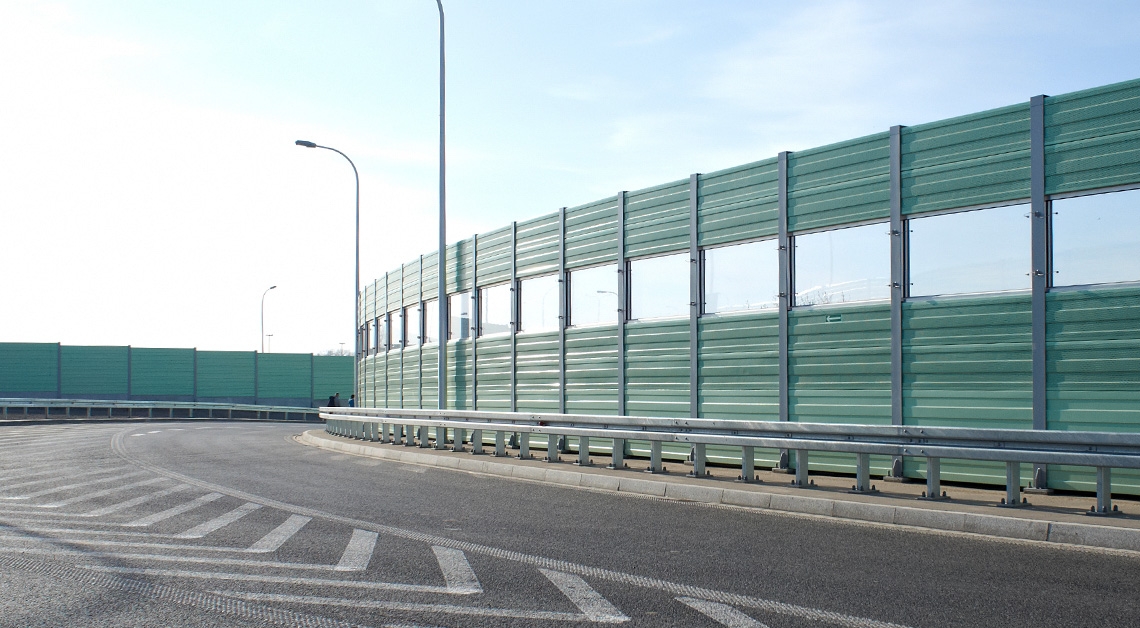
In Singapore, choosing a noise barrier is rarely just a technical decision. On paper, it looks simple enough: identify the noise source, install a barrier, reduce impact. In reality, the city’s dense urban layout, strict regulations, limited space, and constant development activity mean every site comes with its own set of constraints. Those constraints often shape the system choice far more than the acoustic performance alone.
What works on an open construction site in a less crowded environment may not work at all in Singapore. Here, noise barriers have to do more than reduce sound. They need to fit into tight footprints, comply with safety requirements, deal with high-rise surroundings, and often be installed without disrupting surrounding infrastructure.
That combination makes noise barrier selection less about “what is best” and more about “what is workable under real conditions”.
Space limitations change everything
One of the most defining challenges in Singapore is space. Construction sites are often tightly bounded by existing buildings, roads, MRT lines, or other active developments. There is rarely room to install wide, heavily braced barrier systems.
This immediately affects design choices. Many high-performance acoustic barriers require depth, stability, and optimal positioning to work properly. In Singapore, that ideal placement is not always possible. Barriers often end up closer to the noise source than preferred, or positioned at awkward angles due to site boundaries.
When space is limited, slimmer modular systems tend to be used. These are easier to fit into narrow perimeters and can be adapted as the site evolves. The trade-off is that slimmer systems may offer less acoustic mass or reduced absorption compared to larger engineered structures.
So the design question becomes less about maximum performance and more about “what can physically fit without interfering with site operations”.
High-rise surroundings and sound reflection challenges.
Singapore’s skyline is dense and vertical. That creates a different kind of noise behaviour compared to low-rise environments. Sound does not just travel horizontally. It reflects off tall façades, bounces between buildings, and can travel upward into residential or commercial units several floors above ground level.
This makes barrier height a critical factor, but also a limited one. Increasing height is not always possible due to wind loading, structural safety, or planning restrictions. Even when it is possible, there is a point where additional height delivers diminishing returns because sound simply finds new paths over and around the barrier.
As a result, many projects in Singapore combine barriers with absorptive materials. Instead of relying purely on reflection-blocking surfaces, absorptive panels help reduce the echo effect that is common in tight urban corridors.
This is especially important in areas where reflective glass buildings are nearby, as sound can amplify between surfaces and create unexpected hotspots of noise.
Strict regulatory expectations and compliance pressure.
Noise control in Singapore is closely managed through regulatory frameworks that govern construction activities, especially in residential or mixed-use zones. Contractors are often required to meet specific noise limits at site boundaries, particularly during sensitive hours.
This regulatory pressure influences barrier selection in a very direct way. It is not enough for a system to reduce noise in theory. It has to demonstrate measurable performance in real site conditions.
That often pushes projects towards certified acoustic systems rather than improvised or low-cost solutions. While timber hoarding is still used in some cases, higher-specification acoustic barriers are increasingly common, particularly in dense residential districts or near hospitals, schools, and transport infrastructure.
Compliance is not just about avoiding complaints. It is also about maintaining project continuity. Noise issues can lead to work restrictions, delayed approvals, or additional mitigation requirements, all of which affect timelines and cost.
Tight construction schedules and installation speed.
Singapore’s construction environment is fast-paced. Projects are often working against strict deadlines, especially in infrastructure and high-density residential developments. That puts pressure on noise control systems to be installed quickly without slowing down the main works.
This is where modular barrier systems become particularly important. Pre-fabricated panels that can be rapidly assembled on site are often preferred over bespoke structures that require extensive on-site fabrication.
However, the speed of installation cannot come at the expense of stability. Singapore’s tropical climate introduces strong winds and heavy rainfall, meaning barriers must be securely anchored and structurally sound even when installed quickly.
This creates a balancing act between rapid deployment and long-term reliability. Systems that are too light or temporary may be fast to install but risk failure in adverse weather conditions, which is not acceptable in most regulated sites.
Weather conditions influence material choice.
The tropical climate in Singapore is another major factor shaping barrier selection. High humidity, frequent rainfall, and strong sunlight exposure all affect material performance over time.
Materials that might perform well in temperate climates can degrade faster in tropical conditions. Timber, for example, may warp or deteriorate if not properly treated. Metal systems need corrosion resistance, particularly in long-term installations. Even acoustic infill materials must be designed to resist moisture absorption, which can reduce performance.
This pushes many projects towards galvanised steel frames, weather-resistant composite panels, and protective surface treatments. Durability is not just a maintenance concern. It directly affects acoustic consistency over the lifespan of the project.
Urban density and limited buffer zones.
In many countries, construction sites have the luxury of buffer zones between active work and nearby buildings. In Singapore, those buffers are often minimal or non-existent.
This means noise barriers are frequently installed very close to both the source and the receiver. When barriers are placed too close to the noise source, their effectiveness can be reduced because sound waves have not yet fully developed into predictable patterns. When placed too close to receivers, they may not fully block the line of sight for elevated noise sources.
This constraint often leads to layered mitigation strategies rather than reliance on a single barrier line. For example, barriers may be combined with equipment enclosures, temporary acoustic screens around specific machines, and adjusted work sequencing to reduce peak noise periods.
Equipment-heavy works and vibration considerations.
A significant portion of the noise in Singapore construction comes not just from airborne sound but from vibration-heavy activities such as piling, excavation, and demolition. In these cases, barriers alone have limited effect.
Vibration travels through the ground and structural elements, bypassing traditional acoustic shielding. This is particularly relevant in a city with closely spaced buildings and shared foundations in some developments.
As a result, barrier systems are often paired with vibration mitigation measures such as isolation pads, controlled piling methods, or sequencing adjustments. Without this combination, even well-designed barriers may not achieve the required noise reduction levels.
Making the system choice in practice.
In Singapore, choosing a noise barrier is rarely about selecting the most advanced or expensive system. It is about matching constraints with functionality.
A high-performance acoustic wall might look ideal in theory, but if it cannot be installed within a narrow site boundary or maintained in tropical conditions, it becomes impractical. On the other hand, a basic barrier might be easy to install but fail to meet regulatory thresholds in dense residential areas.
Most real-world solutions end up being hybrid systems. These combine modular construction for flexibility, absorptive surfaces for reflection control, and durable framing for long-term exposure. The exact mix depends heavily on site layout, surrounding buildings, project duration, and regulatory sensitivity.
Bringing It Together
Noise barriers in Singapore are shaped as much by environment and regulation as by acoustics. Space constraints, high-rise surroundings, strict compliance requirements, tropical weather, and rapid construction schedules all influence what gets installed and how it performs.
Because of that, barrier selection becomes less about choosing a product and more about designing a response to a set of constraints. The most effective systems are not necessarily the largest or most expensive, but the ones that adapt cleanly to the realities of the site.
In a city where every metre of space and every decibel matters, that practical balance is what ultimately defines success.