

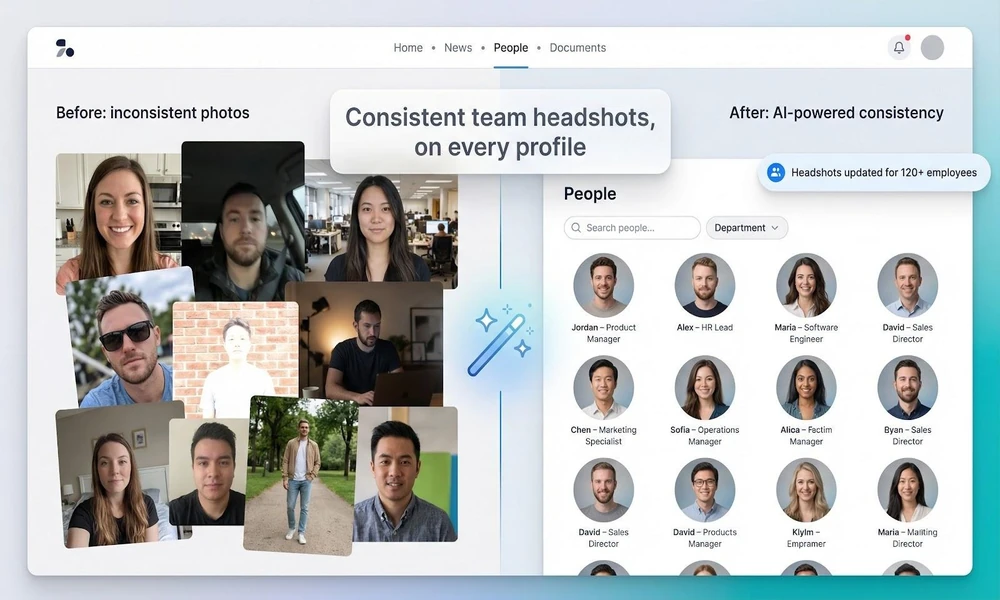
The practical goal is portraits that look connected across departments and can be repeated as the team changes. That goal shapes what gets captured, who needs to review it, how exceptions are handled, and what the final files should make possible. A team page can become outdated quickly when the portrait system depends on memory instead of rules, so the article below focuses on planning choices that make the work usable after the shoot or edit is finished.
- Open studio appointments: best when individuals can travel and the organization needs simple consistency over time.
- On-site team day: useful when many people need portraits quickly and the company wants a unified gallery.
- Hybrid standard with makeup sessions: strongest when the team is distributed or hiring continuously.
The options are not meant to rank one path as universally better. They separate buying situations. For a people or marketing team choosing a headshot process for a company that keeps adding staff, the useful comparison is whether the path reduces solving the immediate backlog with a one-time shoot that leaves no standard for the next hiring wave and still produces portraits that look connected across departments and can be repeated as the team changes. That framing keeps the article away from generic vendor shopping and closer to the operational choice the team actually has to make.
Before choosing, it helps to ask what will be hard after the files arrive. If the answer is review, versioning, internal distribution, or future reuse, the buying decision should account for a documented standard for background, crop, retouching, wardrobe notes, and new-hire scheduling. A cheaper or simpler path can be the right choice when the brief is narrow, but it becomes expensive if another team has to rebuild context after production.
Compare for repeatability
Teams should also decide how they will recognize success for future hires. A polished image or edit may still miss the job if it does not help with makeup days, if it creates confusion around remote staff, or if it leaves the next department guessing. The best review criteria are specific enough to prevent late-stage preference debates.
Another useful question is what should happen after the first version is delivered. Future hires may look complete on shoot day, but the real value often appears when the files are cropped, shared, inserted into a campaign, or reused by another team. Planning for makeup days and remote staff keeps the asset from becoming a one-time decoration.
Option one: studio appointments
The planning conversation should leave room for constraints. People may arrive late, a room may change, or a reviewer may ask for a different emphasis after seeing the first selects. When individual control, calendar flexibility, and travel friction are already connected to the purpose of the piece, those adjustments are less likely to damage the final result.
That does not mean every detail needs to be rigid. The brief can leave room for judgment while still protecting individual control. The difference is that flexibility is attached to a goal: supporting calendar flexibility, keeping travel friction realistic, and making sure the final work still answers the problem that created the assignment. Teams comparing those paths can use Indigo Visual’s professional headshots page to think through individual portraits, group sessions, and on-site options.
Option two: on-site team day
One practical test is whether a new person could read the brief and understand how to act. If fast throughput is described only as a mood, the team still has to interpret it. If the brief connects it to shared direction, office logistics, and portraits that look connected across departments and can be repeated as the team changes, the production team has a clearer path and the internal reviewers have a fairer standard.
Before the team signs off, it is worth asking who will use the asset next. If the next user needs shared direction, they may need different file names, crops, or context than the person approving the first draft. If they need office logistics, the handoff should make that obvious instead of relying on someone to remember the plan later.
Option three: hybrid standard
Another useful question is what should happen after the first version is delivered. Distributed teams may look complete on shoot day, but the real value often appears when the files are cropped, shared, inserted into a campaign, or reused by another team. Planning for new hire cadence and gallery continuity keeps the asset from becoming a one-time decoration.
Distributed teams should be decided before the team starts comparing creative preferences. For a people or marketing team choosing a headshot process for a company that keeps adding staff, that choice affects new hire cadence, gallery continuity, and the way the final asset will be reviewed. A useful brief turns the concern into a practical standard, so the work can be judged against portraits that look connected across departments and can be repeated as the team changes rather than against whichever sample image happens to be most recent.
Pick the path your team can maintain
That does not mean every detail needs to be rigid. The brief can leave room for judgment while still protecting ownership. The difference is that flexibility is attached to a goal: supporting retouching rules, keeping file replacement realistic, and making sure the final work still answers the problem that created the assignment. If the headshot refresh is tied to a broader brand update, Indigo Visual’s business photography services page can help separate portrait needs from wider campaign imagery.
The easy mistake is to treat ownership as a small production detail. In practice, it influences who needs to be prepared, what has to be captured first, and which decisions can wait until review. When retouching rules and file replacement are named early, the team has a better chance of protecting which headshot path balances speed, consistency, participant comfort, and repeatability without adding unnecessary complexity.
The best headshot option is not always the one that clears the fastest calendar. It is the process the organization can repeat without slowly losing consistency each time someone new joins the team.