

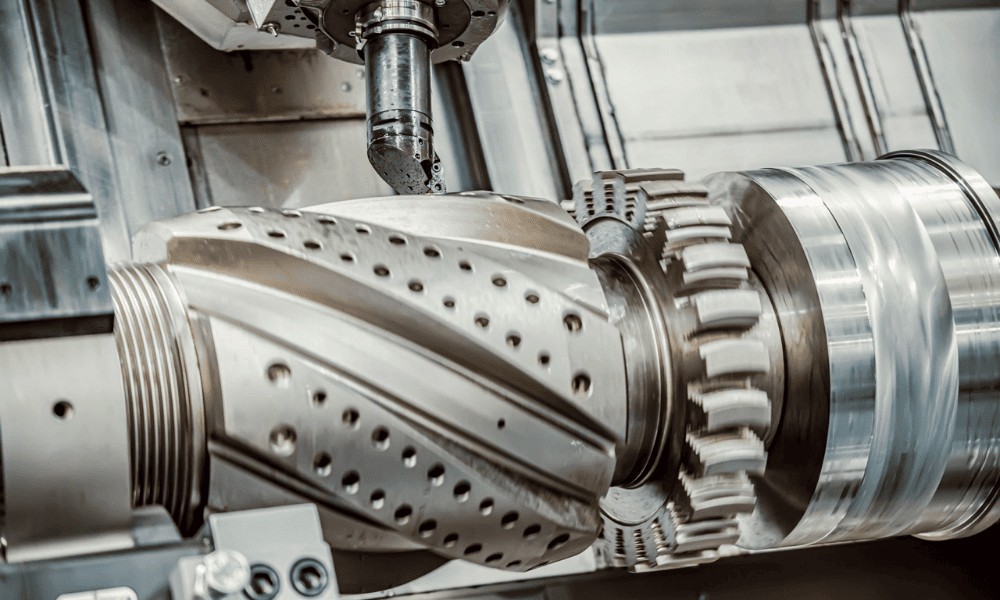
There is a moment in manufacturing when shaping stops and refinement begins. The part already exists. It has weight. It has form. But it is not ready yet. That final stage is where small differences start to matter a lot. A fraction of a millimeter can decide whether something fits or fails. That is why precision machining vietnam often becomes the focus after casting or forging has done its job.
Machining is not about creating strength from nothing. It is about revealing accuracy that is already there. It trims away excess material, sharpens edges, and brings dimensions into line with reality. This stage feels quieter than casting or forging, but it carries just as much responsibility.
Removing excess material with control
Machining starts with subtraction. Material that served its purpose during shaping now needs to go. The challenge is removing it without disturbing what matters.
Controlled cutting allows surfaces to be cleaned up without introducing stress. Tools follow planned paths, removing small amounts at a time. That patience protects the integrity of the part while moving it closer to its final form.
- Cutting paths are planned to avoid unnecessary force
- Material removal happens gradually, not aggressively
- Heat buildup is managed to prevent distortion
- Tool wear is monitored to keep cuts consistent
Surface finish and tolerance expectations
Surface quality is more than appearance. Smooth surfaces reduce friction, improve sealing, and support long term performance.
Machining allows surfaces to be refined to specific tolerance levels. Rough areas left behind by earlier processes are corrected. Edges are cleaned. Contact points become reliable.
- Smooth finishes reduce wear during use
- Tight tolerances support proper alignment
- Clean surfaces improve fit and function
- Consistent finishes simplify inspection
Equipment and tooling considerations
Machining accuracy depends heavily on the tools doing the work. Tool selection, machine stability, and calibration all play a role.
Cutting tools must stay sharp. Machines must hold position under load. Even small vibrations can affect results. That is why machining environments are often controlled carefully.
- Tool condition is checked regularly
- Machines are calibrated to maintain accuracy
- Cutting speeds are adjusted based on material
- Coolant systems manage heat during operation
Quality checks before final delivery
Inspection does not wait until the end. Measurements are taken throughout the machining process to ensure nothing drifts out of range.
Final checks confirm dimensions, surface finish, and overall consistency. These steps protect downstream assembly and reduce the risk of failure after delivery.
Before parts move out the door, many teams rely on precision machining vietnam to bring everything into alignment. It is the stage where intention becomes exact, and where small details stop being small. When accuracy matters, this is where manufacturing earns its credibility.